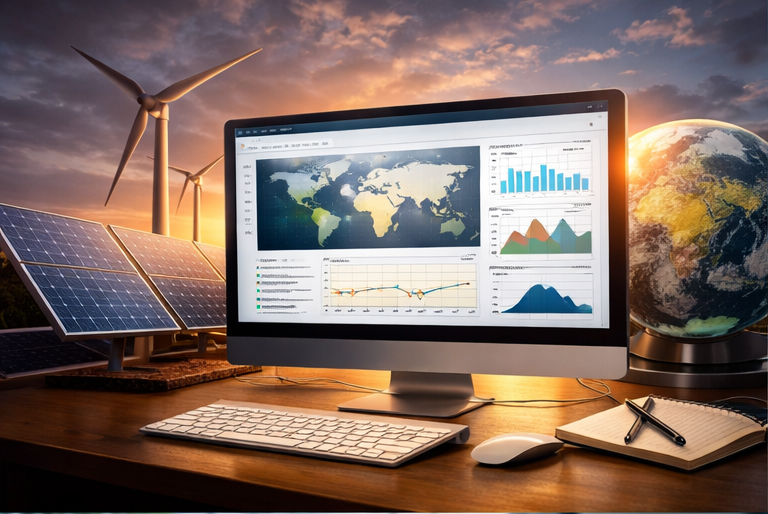
Over a period of more than three years, we have been working closely with a team of energy and climate experts on the development of a digital knowledge platform focused on publicly available publications in the energy and sustainability domain. The goal of the project is to make scientific studies, reports, and policy-related publications easier to discover, navigate, and compare for professionals working in energy, research, policy, and related fields.
At the core of the platform is a structured approach to content aggregation and metadata modeling. Publications originating from scientific institutions, associations, and public bodies are collected, categorized, and enriched with consistent metadata, allowing users to filter and search across a wide range of sources. Particular emphasis was placed on transparency, traceability of sources, and a clear separation between original publications and platform-added structure.
From the beginning, the collaboration was characterized by a continuous and practical exchange with the expert team. Through regular weekly coordination meetings, current tasks were discussed, functional priorities were aligned, and upcoming steps were validated together. This close and consistent communication ensured that domain expertise directly shaped the platform’s information model, classification logic, and search architecture.
The platform evolved incrementally, with new features introduced step by step based on real usage insights and expert feedback. Early development focused on reliable content structuring and navigation, followed by increasingly advanced search capabilities, refined filtering mechanisms, and structured result presentations. Throughout the process, terminology, tagging strategies, and thematic groupings were continuously adjusted to reflect how professionals actually work with energy and climate publications.
Testing was carried out in parallel with development in close coordination with domain experts and selected users from the research and energy community. This allowed both technical stability and content relevance to be validated under realistic conditions. The ongoing dialogue ensured that the system remained scientifically sound while also being practically usable.
The resulting platform provides a scalable foundation for a knowledge-driven energy ecosystem, combining robust web architecture with a carefully structured metadata framework. Its modular design allows for future extensions, including AI-supported search, semantic enrichment, and intelligent content recommendations, supporting the long-term vision of improving access to high-quality energy and climate knowledge.